
To G--, her unique rose,
A-- sends the bonds of precious love.
What strength have I that I may bear it,
That I may endure your absence?
Is my strength the strength of stones
That I can wait for your return?
I never cease from aching, night and day,
Like someone missing a hand and foot.
Without you anything happy or delightful
Seems like mud trod underfoot.
Instead of rejoicing I weep;
My spirit never seems joyful.
When I remember the kisses you gave me,
The way you refreshed my little breasts with sweet words,
I would like to die
Since I cannot see you.
What should I, most wretched, do?
Where should I, most poor, do?
O, if my body had been committed to earth
Until your longed-for return,
Or if I could go on a journey like Habakkuk,
So that just once I could come to where
I saw the face of my lover,
Then I would not care if I died that very hour.
For there is no one who has been born in the world
Who is so lovable and dear,
No one who without feigning
Loves me with so deep a love.
Therefor, I ache without end
Until I am allowed to see you.
According to one wise man, the worst misery
Is to be far from someone one cannot live without.
As ling as the world endures,
You will never be blotted out from my heart's care.
Why do I linger with so many words?
Come back, sweet love!
Don't put off your journey any longer.
Know that I can no longer endure your absence.
Farewell--
Remember me.
Stehling 113, found in Gay and Lesbian Poetry: An Anthology from Sappho to Michelangelo, edited by James J. Wilhelm.
Showing posts with label poetry. Show all posts
Showing posts with label poetry. Show all posts
Friday, May 2, 2008


Saturday, March 8, 2008
Miscellaneous Observations, and some half-assed research
Richard and Robin Nursery Rhyme
First of all, there’s two versions of the last two lines:
Robin and Richard were two pretty men,
They laid in bed till the clock struck ten;
Then up starts Robin and looks in the sky:
"Oh, brother Richard, the sun's very high!
The bull's in the barn threshing the corn;
The cocks on the hayrick blowing is horn"
and
You go before, with the bottle and bag,
And I will come after on little Jack Nag.”
Somewhere there is a forum with an individual complaining about how “inappropriate” this rhyme is for their child, but I can’t find it again. I did find a fiction piece with the same title in Harper’s Magazine from December 1894- with the subjects “artists” and “bachelors”, I’d eat my hat if it’s not about (or inspired by) Wilde and co. But I don’t feel like paying for a year to read this one piece. *tears hair* Do any of you beautiful friendly readers have a subscription? It would be totally amazing if you could email me the PDF.
Google searches come up with Robin Hood and Richard Lionheart. The closest there is to even a discussion of this rhyme is a comment on one site that this is a “lost” rhyme with an unknown history.
After a short trip to the library, at least I have an “around by” date now: 1765, the year Mother Goose’s Melody: or, Sonnets for the Cradle was first published (first Mother Goose published ever, actually). Quote: “What lazy rogues are these to lie in bed so long, I daresay they have no clothes to their backs, for Laziness clothes a man with rags.”
Supposedly later versions have Alfred and Richard, “two lazy men”, instead, but this book (The Annotated Mother Goose, Baring-Gould, 1962) has an extreme lack of clear citations. The shift in terms in a later version may indicate some editor had the same hunch as me, that the two men are in a relationship. I can’t find any other evidence for the Alfred and Richard claim in my admittedly limited resources. Although, on that note, NAU finally has JSTOR access! Whee!
On a totally unrelated tack, this is a very interesting quote from John Keay's India: A History, referring to the medieval Muslim conquests in India (1293~1310) by Ala-ud-din Khalji:
"Among Cambay's seized assets the most prized was a Hindu captive who would add particular lustre to the Khalji sultanate. A eunuch and a slave, he quickly espoused Islam but retained the nickname 'Thousand-dinar Kafur', presumably a reference to his original valuation. 'His beauty,' says Barani, 'captivated Ala-ud-din' who thereafter trusted him implicitly and appointed him a Malik-naib, or senior commander."
Barani is Ziau-ud-din Barani, an important contemporary historian.
The other thing I'm sharing because it's hilarious. It's taken from the notes on Robert D. Tobin's essay in Outing Goethe and His Age, edited by Alice A. Kuzniar.
"13. This incident may have origins in the adventures of the two Counts Stolberg, with whom in 1775 Goethe first visited Switzerland and who enjoyed bathing in the nude so much they were eventually asked to leave the country (Eissler 1:373)."
The "incident" in question is Werther's narcissistic admiration of his friend Frederick's nude bathing body in Johann Goethe's novel The Sorrows of Young Werther. This note has no other context or explanation, which is why it's so funny.
The same essay inspired me to look up Goethe's Roman Elegies ("...August Wilhelm Schlegel objected to a passage in Goethe's tenth elegy that, in a list of great warriors, included Frederick the Great along with Alexander, Caesar, and Henry IV, who would gladly exchange their victories for a night in bed with the speaker's lover." Tobin 98) The context is clear that the shared trait is intentional on Goethe's part, except for Henry IV, Holy Roman Emperor, who was/is called the Great, but I can find no evidence of him having homoerotic inclinations. The gender of the speaker's lover in the Elegies is fluid, sometimes female and sometimes appearing to be a representative Cupid, who would be a third party except for passages describing him as the object. The original objection would seem to indicate a larger understanding of the lover as male. Was there ever a German tradition (queer or mainstream) of Henry having had male lovers? I don't know.
First of all, there’s two versions of the last two lines:
Robin and Richard were two pretty men,
They laid in bed till the clock struck ten;
Then up starts Robin and looks in the sky:
"Oh, brother Richard, the sun's very high!
The bull's in the barn threshing the corn;
The cocks on the hayrick blowing is horn"
and
You go before, with the bottle and bag,
And I will come after on little Jack Nag.”
Somewhere there is a forum with an individual complaining about how “inappropriate” this rhyme is for their child, but I can’t find it again. I did find a fiction piece with the same title in Harper’s Magazine from December 1894- with the subjects “artists” and “bachelors”, I’d eat my hat if it’s not about (or inspired by) Wilde and co. But I don’t feel like paying for a year to read this one piece. *tears hair* Do any of you beautiful friendly readers have a subscription? It would be totally amazing if you could email me the PDF.
Google searches come up with Robin Hood and Richard Lionheart. The closest there is to even a discussion of this rhyme is a comment on one site that this is a “lost” rhyme with an unknown history.
After a short trip to the library, at least I have an “around by” date now: 1765, the year Mother Goose’s Melody: or, Sonnets for the Cradle was first published (first Mother Goose published ever, actually). Quote: “What lazy rogues are these to lie in bed so long, I daresay they have no clothes to their backs, for Laziness clothes a man with rags.”
Supposedly later versions have Alfred and Richard, “two lazy men”, instead, but this book (The Annotated Mother Goose, Baring-Gould, 1962) has an extreme lack of clear citations. The shift in terms in a later version may indicate some editor had the same hunch as me, that the two men are in a relationship. I can’t find any other evidence for the Alfred and Richard claim in my admittedly limited resources. Although, on that note, NAU finally has JSTOR access! Whee!
On a totally unrelated tack, this is a very interesting quote from John Keay's India: A History, referring to the medieval Muslim conquests in India (1293~1310) by Ala-ud-din Khalji:
"Among Cambay's seized assets the most prized was a Hindu captive who would add particular lustre to the Khalji sultanate. A eunuch and a slave, he quickly espoused Islam but retained the nickname 'Thousand-dinar Kafur', presumably a reference to his original valuation. 'His beauty,' says Barani, 'captivated Ala-ud-din' who thereafter trusted him implicitly and appointed him a Malik-naib, or senior commander."
Barani is Ziau-ud-din Barani, an important contemporary historian.
The other thing I'm sharing because it's hilarious. It's taken from the notes on Robert D. Tobin's essay in Outing Goethe and His Age, edited by Alice A. Kuzniar.
"13. This incident may have origins in the adventures of the two Counts Stolberg, with whom in 1775 Goethe first visited Switzerland and who enjoyed bathing in the nude so much they were eventually asked to leave the country (Eissler 1:373)."
The "incident" in question is Werther's narcissistic admiration of his friend Frederick's nude bathing body in Johann Goethe's novel The Sorrows of Young Werther. This note has no other context or explanation, which is why it's so funny.
The same essay inspired me to look up Goethe's Roman Elegies ("...August Wilhelm Schlegel objected to a passage in Goethe's tenth elegy that, in a list of great warriors, included Frederick the Great along with Alexander, Caesar, and Henry IV, who would gladly exchange their victories for a night in bed with the speaker's lover." Tobin 98) The context is clear that the shared trait is intentional on Goethe's part, except for Henry IV, Holy Roman Emperor, who was/is called the Great, but I can find no evidence of him having homoerotic inclinations. The gender of the speaker's lover in the Elegies is fluid, sometimes female and sometimes appearing to be a representative Cupid, who would be a third party except for passages describing him as the object. The original objection would seem to indicate a larger understanding of the lover as male. Was there ever a German tradition (queer or mainstream) of Henry having had male lovers? I don't know.
Tuesday, November 20, 2007
Obscure Chinese lesbian stories, and also some poetry
Well, "lesbian". Insert generic explanation of the narrow cultural context surrounding the concepts of lesbianism and homosexuality in general here.
Last semester I took a history course, Women In Asia. One of our required readings was Jonathan D. Spence's The Death of Woman Wang, a charming, emotional, and very well-written portrait of China's tiny T'an-ch'eng Province during the 17th century. One of Spence's sources is P'u Sung-ling, a Chinese historian and storyteller living in the local city of Tzu-ch'uan at the time. This short story was included by Spence as an example of works satirizing virtuous women and widows.
An old widow was spinning one evening when suddenly a young girl pushed open the door and said with a laugh, "Old woman, aren't you tired?" The girl looked eighteen or nineteen; her face was beautiful, her clothes were bright and elegant. Startled, the old woman asked where she came from, and the girl replied, "I pitied your lonely life and came to keep you company." The old woman suspected that she had run away from some wealthy home, and kept on questioning her insistently. But the girl said, "Old woman, don't be afraid. I am alone in the world, just as you are. Admiring the purity of your life, I came to be with you; if we stay together, we can avoid lonliness--isn't that the best thing?" The old woman suspected that she must be a fox spirit, and stayed silent and suspicious. The girl climbed up onto the frame and started spinning in her place, saying, "You don't have to worry. I'm good at making my own living in this way, and you won't have to support me." When the old woman saw how friendly and helpful she was, and how sweet, she felt at ease.
When it grew quite dark, the girl said to the old woman, "I brought with me my covers and pillow, and they are still outside the door. When you go out to relieve yourself, please bring them in for me." The old woman went out and found a bag of clothes, and the girl laid them out on the bed; they were of some kind of brocaded fabric, incomparably fragrant and soft; the old woman laid out her own cotton quilt and lay down on the bed with the girl. Hardly had the girl slipped off her silken dress than a strange scent filled the room; and as they lay there the old woman thought to herself, What a shame to be next to such a beauty and not to have a man's body. From her pillow the girl smiled and said, "You're an old woman of seventy, how can you still have such restless thoughts?" And the old woman replied, "I wasn't." The girl said, "If you are not having reckless thoughts, why were you wishing that you were a man?" The old woman was now all the more sure that she was dealing with a fox spirit, and grew frightened. At which the girl smiled again, saying, "You are the one who wants to be a man, how can it be that you are afraid of me?"
In the same class, another reading dealt with love poetry, ostensibly heterosexual. The reading introduction introduced this poem as celebrating the historic freedom of Chinese women- but that's certainly not what I got out of it, and my judgment was verified by the poem's inclusion in the introduction of Bret Hinsch's book Passions of the Cut Sleeve: The Male Homosexual Tradition in China.
"Splendid"
How splendid he was!
Yes, he met me between the hills of Nao.
Our chariots side by side we chased two boars.
He bowed to me and said I was very nimble.
How strong he was!
Yes, he met me on the road at Nao.
Side by side we chased two stags.
He bowed to be and said "well done."
How magnificent he was!
Yes, he met me on the south slopes of Nao.
Side by side we chased two wolves.
He bowed to me and said "that was good."
This poem, obvious by itself in this context, was even more apparent next to the other selections, which emphasized the woman's loving subservience and contained feminine imagery rather than "Splendid"s egalitarian masculinity. We had an interesting in-class discussion in which my (correct) opinion was held to be equal to other arguments that this poem predated strict gender hierarchy, that the "woman" speaking was someone like the female general we had recently learned about, or that equality of spirit was more common than traditional Confucianism would have us believe, when all I could do was call bullshit. At least we agreed that the repeated "he met me" seemed to have a sexual undertone.
I didn't update for two months? Really? Well, it won't happen again. Watch this space!
Last semester I took a history course, Women In Asia. One of our required readings was Jonathan D. Spence's The Death of Woman Wang, a charming, emotional, and very well-written portrait of China's tiny T'an-ch'eng Province during the 17th century. One of Spence's sources is P'u Sung-ling, a Chinese historian and storyteller living in the local city of Tzu-ch'uan at the time. This short story was included by Spence as an example of works satirizing virtuous women and widows.
An old widow was spinning one evening when suddenly a young girl pushed open the door and said with a laugh, "Old woman, aren't you tired?" The girl looked eighteen or nineteen; her face was beautiful, her clothes were bright and elegant. Startled, the old woman asked where she came from, and the girl replied, "I pitied your lonely life and came to keep you company." The old woman suspected that she had run away from some wealthy home, and kept on questioning her insistently. But the girl said, "Old woman, don't be afraid. I am alone in the world, just as you are. Admiring the purity of your life, I came to be with you; if we stay together, we can avoid lonliness--isn't that the best thing?" The old woman suspected that she must be a fox spirit, and stayed silent and suspicious. The girl climbed up onto the frame and started spinning in her place, saying, "You don't have to worry. I'm good at making my own living in this way, and you won't have to support me." When the old woman saw how friendly and helpful she was, and how sweet, she felt at ease.
When it grew quite dark, the girl said to the old woman, "I brought with me my covers and pillow, and they are still outside the door. When you go out to relieve yourself, please bring them in for me." The old woman went out and found a bag of clothes, and the girl laid them out on the bed; they were of some kind of brocaded fabric, incomparably fragrant and soft; the old woman laid out her own cotton quilt and lay down on the bed with the girl. Hardly had the girl slipped off her silken dress than a strange scent filled the room; and as they lay there the old woman thought to herself, What a shame to be next to such a beauty and not to have a man's body. From her pillow the girl smiled and said, "You're an old woman of seventy, how can you still have such restless thoughts?" And the old woman replied, "I wasn't." The girl said, "If you are not having reckless thoughts, why were you wishing that you were a man?" The old woman was now all the more sure that she was dealing with a fox spirit, and grew frightened. At which the girl smiled again, saying, "You are the one who wants to be a man, how can it be that you are afraid of me?"
In the same class, another reading dealt with love poetry, ostensibly heterosexual. The reading introduction introduced this poem as celebrating the historic freedom of Chinese women- but that's certainly not what I got out of it, and my judgment was verified by the poem's inclusion in the introduction of Bret Hinsch's book Passions of the Cut Sleeve: The Male Homosexual Tradition in China.
"Splendid"
How splendid he was!
Yes, he met me between the hills of Nao.
Our chariots side by side we chased two boars.
He bowed to me and said I was very nimble.
How strong he was!
Yes, he met me on the road at Nao.
Side by side we chased two stags.
He bowed to be and said "well done."
How magnificent he was!
Yes, he met me on the south slopes of Nao.
Side by side we chased two wolves.
He bowed to me and said "that was good."
This poem, obvious by itself in this context, was even more apparent next to the other selections, which emphasized the woman's loving subservience and contained feminine imagery rather than "Splendid"s egalitarian masculinity. We had an interesting in-class discussion in which my (correct) opinion was held to be equal to other arguments that this poem predated strict gender hierarchy, that the "woman" speaking was someone like the female general we had recently learned about, or that equality of spirit was more common than traditional Confucianism would have us believe, when all I could do was call bullshit. At least we agreed that the repeated "he met me" seemed to have a sexual undertone.
I didn't update for two months? Really? Well, it won't happen again. Watch this space!
Thursday, September 6, 2007
A Sapphick Epistle
Oh, you wanted some lesbians? Oh, okay. Here you go. This is an excerpt from an anonymous 1778 satire entitled A Sapphick Epistle. Don't let anyone tell you people in the past didn't know what lesbians were. That person is wrong. Now, whether or not they believed they actually existed- another story for another time, I guess. On to the poetry.
Curse on my stars, that I was born,
In such an age of lust and scorn.
Oh, Sappho, had'st thou been
Alive in these rude, filthy days,
Thy verses had been all in praise
Of me and beauty's queen.
Oh! had it been my wretched fate
That Phaon had made me his hate,
What then had been my case?
Like D[amer] I had scorn'd the youth,
Kiss'd every female's lovely mouth,
And followed every face.
Look on that mountain of delight,
Where grace and beauty doth unite,
Where wreathed smiles must thrive;
While Strawberry-hill at once doth prove,
Taste, elegance, and Sapphick love,
In gentle Kitty Clive.
...
Ye Sapphick Saints, how ye must scorn
The dames with vulgar notions born,
Who prostitute to man:
Who toil and sweat the tedious night,
And call the male embrace delight,
The filthy marriage plan.
Curse on my stars, that I was born,
In such an age of lust and scorn.
Oh, Sappho, had'st thou been
Alive in these rude, filthy days,
Thy verses had been all in praise
Of me and beauty's queen.
Oh! had it been my wretched fate
That Phaon had made me his hate,
What then had been my case?
Like D[amer] I had scorn'd the youth,
Kiss'd every female's lovely mouth,
And followed every face.
Look on that mountain of delight,
Where grace and beauty doth unite,
Where wreathed smiles must thrive;
While Strawberry-hill at once doth prove,
Taste, elegance, and Sapphick love,
In gentle Kitty Clive.
...
Ye Sapphick Saints, how ye must scorn
The dames with vulgar notions born,
Who prostitute to man:
Who toil and sweat the tedious night,
And call the male embrace delight,
The filthy marriage plan.
Thursday, August 23, 2007
Obscure Elizabethan Poets
I love Richard Barnfield more than you can possibly know. Author of two books of poetry, The Affectionate Shepherd and Cynthia (available in one nifty volume from Amazon), he is sadly neglected in the shadow of such giants as Shakespeare, Marlowe, and Johnson. He is also, as far as I can tell, the only poet of his time to publish blatantly homoerotic and sometimes even sexually explicit verses. From The Affectionate Shepherd (absolutely not to be confused with Marlowe's The Passionate Shepherd to his Love):
Oh would to God he would but pitty mee,
That love him more than any mortall wight;
Then he and I with love would soone agree,
That now cannot abide his Sutors sight.
O would to God (so I might have my fee)
My lips were honey, and thy mouth a Bee.
Then shouldst thou sucke my sweet and my faire flower
That now is ripe, and full of honey-berries:
Then would I lead the to my pleasant Bower
Fild full of Grapes, of Mulberries, and Cherries;
Then shouldst thou be my Waspe or else my Bee,
I would thy hive, and thou my honey bee.
Barnfield: Subtle As A Frying Pan To The Face.
"Fee" refers to come, one term in an extensive collection of Elizabethan erotic puns (coin, purse, treasure (famously seen in Shakespeare's sonnet 20), spending, the last of which is still in common use). Bees and honey as references to sex with boys are at least as old of the Romans; Catullus calls his boyfriend Iuventius "mellitus", or honeylike. Karl Heinrich Ulrichs, writing in the 19th century, uses "my little bee" as a reference to a boyfriend.
Sonnet 11, from Cynthia:
Sighing, and sadly sitting by my Love,
He ask'd the cause of my hears sorrowing,
Conjuring me by heavens eternall King
To tell the cause which me so much did move.
Compell'd: (quoth I) to thee will I confesse,
Love is the cause, and only love it is
That doth deprive me of my heavenly blisse.
Love is the paine that doth my heart oppresse.
And what is she (quoth he) whom thou do'st love?
Looke in this glasse (quoth I) there shalt thou see
The perfect forme of my faelicitie.
When, thinking that it would strange Magique prove,
He open'd it, and taking off the cover,
He straight perceav'd himselfe to be my Lover.
Also, I totally lied. Ganymede is mentioned in Barnfield's sonnets several times- sometimes in the same context as The Affectionate Shepherd and clearly a specific boy, sometimes in a double reference to the myth and a boy simultaneously. In at least one case, "ganymede" is used as a noun for an admired boy: "Two stars there are in one faire firmament, (Of some intitled Ganymedes sweet face)..."
The poetry itself is not the only reason Barnfield is special: his books, with these poems, were published in London in 1594 and 1595 (respectively) without fuss or outrage related to their content. There was some furor over his choice of dedication, the Lady Penelope Ritch, but in the preceding note for Cynthia he says, "...the last Terme there came forth a little toy of mine, intituled, The affectionate Shepheard: In the which, his Country Content found such friendly favor, that it hath incouraged me to publish my second fruites." More research needs to be done to decipher the common attitudes that inspired this peaceful addition to the queer canon.
In unrelated news, Erastes would like me to do reviews of gay historical fiction for his collaborative blog Speak Its Name. I plan to start off with Jamie O'Neill's At Swim, Two Boys. Keep a lookout, and wish me luck!
Oh would to God he would but pitty mee,
That love him more than any mortall wight;
Then he and I with love would soone agree,
That now cannot abide his Sutors sight.
O would to God (so I might have my fee)
My lips were honey, and thy mouth a Bee.
Then shouldst thou sucke my sweet and my faire flower
That now is ripe, and full of honey-berries:
Then would I lead the to my pleasant Bower
Fild full of Grapes, of Mulberries, and Cherries;
Then shouldst thou be my Waspe or else my Bee,
I would thy hive, and thou my honey bee.
Barnfield: Subtle As A Frying Pan To The Face.
"Fee" refers to come, one term in an extensive collection of Elizabethan erotic puns (coin, purse, treasure (famously seen in Shakespeare's sonnet 20), spending, the last of which is still in common use). Bees and honey as references to sex with boys are at least as old of the Romans; Catullus calls his boyfriend Iuventius "mellitus", or honeylike. Karl Heinrich Ulrichs, writing in the 19th century, uses "my little bee" as a reference to a boyfriend.
Sonnet 11, from Cynthia:
Sighing, and sadly sitting by my Love,
He ask'd the cause of my hears sorrowing,
Conjuring me by heavens eternall King
To tell the cause which me so much did move.
Compell'd: (quoth I) to thee will I confesse,
Love is the cause, and only love it is
That doth deprive me of my heavenly blisse.
Love is the paine that doth my heart oppresse.
And what is she (quoth he) whom thou do'st love?
Looke in this glasse (quoth I) there shalt thou see
The perfect forme of my faelicitie.
When, thinking that it would strange Magique prove,
He open'd it, and taking off the cover,
He straight perceav'd himselfe to be my Lover.
Also, I totally lied. Ganymede is mentioned in Barnfield's sonnets several times- sometimes in the same context as The Affectionate Shepherd and clearly a specific boy, sometimes in a double reference to the myth and a boy simultaneously. In at least one case, "ganymede" is used as a noun for an admired boy: "Two stars there are in one faire firmament, (Of some intitled Ganymedes sweet face)..."
The poetry itself is not the only reason Barnfield is special: his books, with these poems, were published in London in 1594 and 1595 (respectively) without fuss or outrage related to their content. There was some furor over his choice of dedication, the Lady Penelope Ritch, but in the preceding note for Cynthia he says, "...the last Terme there came forth a little toy of mine, intituled, The affectionate Shepheard: In the which, his Country Content found such friendly favor, that it hath incouraged me to publish my second fruites." More research needs to be done to decipher the common attitudes that inspired this peaceful addition to the queer canon.
In unrelated news, Erastes would like me to do reviews of gay historical fiction for his collaborative blog Speak Its Name. I plan to start off with Jamie O'Neill's At Swim, Two Boys. Keep a lookout, and wish me luck!
Monday, August 20, 2007
Whitman: Why He Rocks
I have internet again! Everybody cheer!
Today's post is brought to you by the discussion I had with my cousin in Borders the other day about Whitman, the greatest embarrassment to conventional democracy in American history. (Somebody else said it first, possibly Norton. He imprints on me like that.) When I got home this afternoon and went to pick a poetry book, hey! there's Leaves of Grass right on my shelf. I have the new Norton Critical Edition, Amazon does not have it listed but it's lovely. Original pronouns, differing edition notes, more footnotes than you can shake a stick at, plus essays in the back.
Anyway. Poetry. If you didn't click the link as you should have done (quick! there's still time!), Whitman believed in democracy as upheld by the "love of comrades". The section of poems entitled "Calamus" is the most blatantly homoerotic, at least with the pronouns in their proper places, and while not as well known (see: not read in school) they are still quite powerful. Sometimes you find people who are determined to read these poems as purely "platonic"; for those people and others who have never seen the plant I provide this picture.
Here are two poems I like from "Calamus". My favorite is too long (When I Heard at the Close of the Day).
I hear it was charged against me that I sought to destroy institutions,
But really I am neither for nor against institutions,
(What indeed have I in common with them? or what with the destruction of them?)
Only I will establish in the Mannahatta and in every city of these States inland and seaboard,
And in the fields and woods, and above every keel little or large that dents the water,
Without edifices of rules or trustees or any argument,
The institution of the love of comrades.
---
Recorders ages hence,
Come, I will take you down underneath this impassive exterior, I will tell you what to say of me,
Publish my name and hang up my picture of that of the tenderest lover,
The friend the lover's portrait, of whom his friend his lover was fondest,
Who was not proud of his songs, but of the measureless ocean of love within him, and freely poured it forth,
Who often walk'd lonesome walks thinking of his dear friends, his lovers,
Who pensive away from the one he loved often lay sleepless and dissatisfied at night,
Who knew too well the sick, sick dread lest the one he lov'd might secretly be indifferent to him,
Whose happiest days were far away through fields, in woods, on hills, he and another wandering hand in hand, they twain apart from other men,
Who oft as he saunter'd the streets curved with his arm shoulder of his friend, while the arm of his friend rested upon him also.
And one more, in case you had begun to think everything was gung-ho hunky-dory for Walt:
Earth, my likeness,
Though you look so impassive, ample and spheric there,
I now suspect that is not all;
I now suspect there is something fierce in you eligible to burst forth,
For an athlete is enamour'd of me, and I of him,
But toward him there is something fierce and terrible in me eligible to burst forth,
I dare not tell it in words, not even in these songs.
P.S. I almost titled this post "Whitman: Meter Is For Pussies" but luckily decided against it.
Today's post is brought to you by the discussion I had with my cousin in Borders the other day about Whitman, the greatest embarrassment to conventional democracy in American history. (Somebody else said it first, possibly Norton. He imprints on me like that.) When I got home this afternoon and went to pick a poetry book, hey! there's Leaves of Grass right on my shelf. I have the new Norton Critical Edition, Amazon does not have it listed but it's lovely. Original pronouns, differing edition notes, more footnotes than you can shake a stick at, plus essays in the back.
Anyway. Poetry. If you didn't click the link as you should have done (quick! there's still time!), Whitman believed in democracy as upheld by the "love of comrades". The section of poems entitled "Calamus" is the most blatantly homoerotic, at least with the pronouns in their proper places, and while not as well known (see: not read in school) they are still quite powerful. Sometimes you find people who are determined to read these poems as purely "platonic"; for those people and others who have never seen the plant I provide this picture.
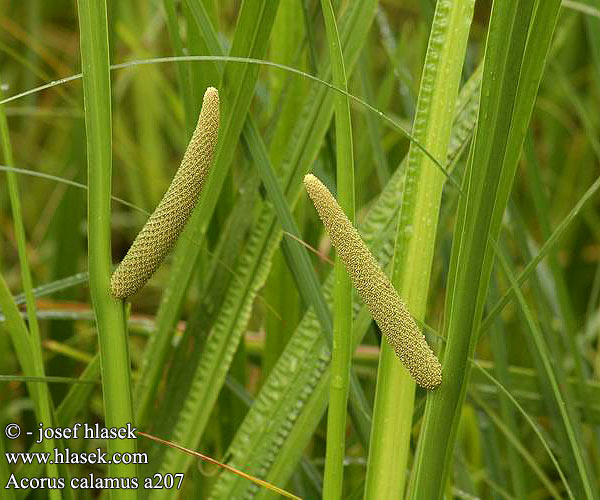
Here are two poems I like from "Calamus". My favorite is too long (When I Heard at the Close of the Day).
I hear it was charged against me that I sought to destroy institutions,
But really I am neither for nor against institutions,
(What indeed have I in common with them? or what with the destruction of them?)
Only I will establish in the Mannahatta and in every city of these States inland and seaboard,
And in the fields and woods, and above every keel little or large that dents the water,
Without edifices of rules or trustees or any argument,
The institution of the love of comrades.
---
Recorders ages hence,
Come, I will take you down underneath this impassive exterior, I will tell you what to say of me,
Publish my name and hang up my picture of that of the tenderest lover,
The friend the lover's portrait, of whom his friend his lover was fondest,
Who was not proud of his songs, but of the measureless ocean of love within him, and freely poured it forth,
Who often walk'd lonesome walks thinking of his dear friends, his lovers,
Who pensive away from the one he loved often lay sleepless and dissatisfied at night,
Who knew too well the sick, sick dread lest the one he lov'd might secretly be indifferent to him,
Whose happiest days were far away through fields, in woods, on hills, he and another wandering hand in hand, they twain apart from other men,
Who oft as he saunter'd the streets curved with his arm shoulder of his friend, while the arm of his friend rested upon him also.
And one more, in case you had begun to think everything was gung-ho hunky-dory for Walt:
Earth, my likeness,
Though you look so impassive, ample and spheric there,
I now suspect that is not all;
I now suspect there is something fierce in you eligible to burst forth,
For an athlete is enamour'd of me, and I of him,
But toward him there is something fierce and terrible in me eligible to burst forth,
I dare not tell it in words, not even in these songs.
P.S. I almost titled this post "Whitman: Meter Is For Pussies" but luckily decided against it.
Subscribe to:
Posts (Atom)